Hepatitis E virus (HEV) is a major cause of acute viral hepatitis worldwide. Its epidemiology is notably heterogeneous: HEV-1 and HEV-2 are primarily transmitted via the fecal–oral route and are prevalent in developing regions, whereas HEV-3 and HEV-4 are zoonotic genotypes, mainly associated with the consumption of contaminated meat products and represent the leading cause of sporadic hepatitis E in industrialized countries.
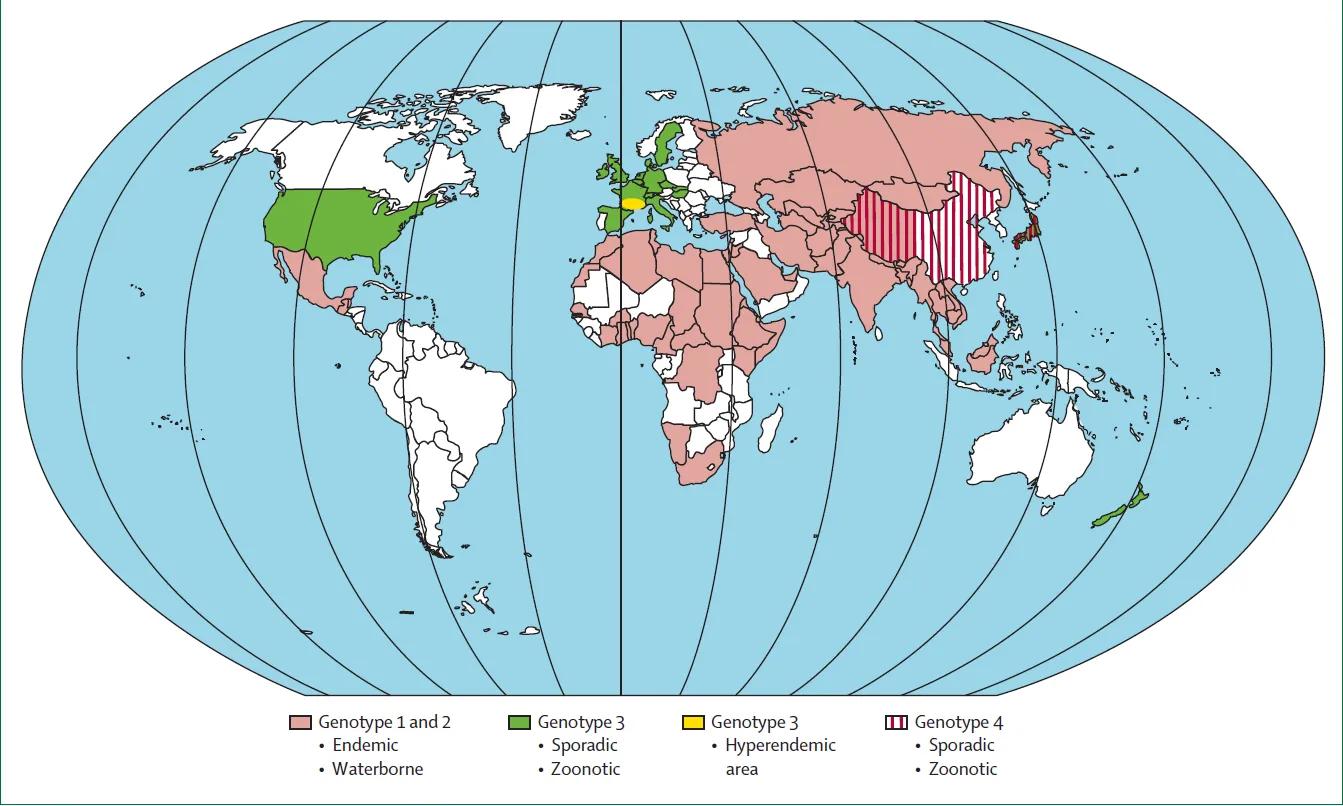
Figure 1: Worldwide distribution of clinical cases of HEV infection
In immunocompetent individuals, HEV infection is typically self-limiting. However, in immunocompromised populations—particularly solid organ transplant recipients—HEV-3 and HEV-4 can establish chronic infection, which may progress to liver fibrosis and cirrhosis. This clinical reality has shifted HEV from being considered a benign, self-limiting pathogen to a virus with clear unmet therapeutic needs.
Despite this, progress in HEV molecular virology and antiviral drug development has been relatively slow, and no approved virus-specific therapies are currently available for chronic HEV infection. A recent study published in Gut by a collaborative team from Peking University, Heidelberg University, and Ruhr University Bochum addresses this gap by advancing both experimental models and antiviral screening strategies, providing new tools and potential therapeutic leads for the field.
1. Moving Beyond Subgenomic Replicons: Toward Full-Length, Infection-Relevant Screening Systems
A central advance of this study is the development of a full-length HEV fluorescent reporter system. Conventional HEV drug screening has largely relied on subgenomic replicons, in which the ORF2 and ORF3 coding regions are deleted. While these systems are experimentally tractable, they fail to recapitulate key aspects of the viral life cycle, including:
• Viral assembly and egress
• Functional contributions of structural proteins to host–virus interactions
• Evaluation of compounds targeting structural components
To address these limitations, the authors engineered a split-GFP tag at the C-terminus of the ORF2 capsid protein, enabling real-time monitoring of viral replication within the context of the full-length genome.This design provides several key advantages:
• Integration of viral replication and structural protein function within a single platform
• Simultaneous assessment of antiviral activity and cytotoxicity through multiplexed readouts
• Direct compatibility with the evaluation of ORF2/ORF3-targeting compounds
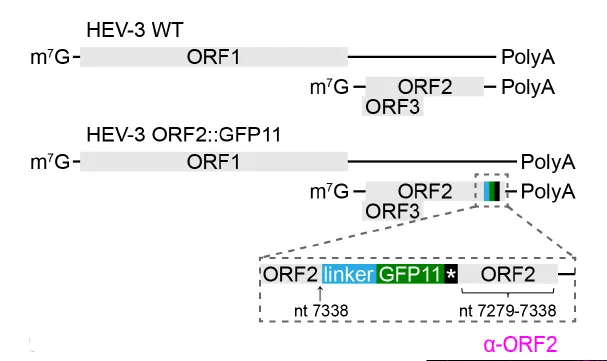
Figure 2: Schematic genome structure of HEV-3
Overall, this system represents a shift from reductionist replicon-based assays toward models that more closely approximate authentic viral infection.
2. Bemnifosbuvir as a Promising Anti-HEV Candidate
Using this platform, the study screened a panel of nucleos(t)ide analogues and identified Bemnifosbuvir (BEM) as a leading candidate with robust antiviral activity.
Importantly, the value of BEM lies not only in its potency but also in several properties that are highly relevant for antiviral development:
2.1 Potent and reproducible antiviral activity
BEM exhibited clear dose-dependent inhibition in vitro, with an IC50 of approximately 0.54 μM, comparing favorably with previously reported candidates.
2.2 Consistent efficacy across experimental models
Its antiviral activity was validated across multiple systems, including hepatoma cell lines, iPSC-derived hepatocyte-like cells, primary human hepatocytes (PHHs), and in vivo infection models. This cross-platform consistency supports its physiological relevance.
2.3 High genetic barrier to resistance
Following long-term passaging (>160 days), the virus remained susceptible to BEM, suggesting a relatively high resistance barrier—an important consideration for RNA virus therapeutics.
2.4 Compatibility with combination therapy
BEM demonstrated additive, and in some settings partially synergistic, effects when combined with ribavirin (RBV), indicating its potential integration into existing treatment regimens rather than requiring complete replacement.
3. Repositioning ORF2: From Structural Component to Functional Hub
Beyond drug identification, this study reinforces a broader conceptual shift in HEV biology: the ORF2 capsid protein should no longer be viewed solely as a structural element, but rather as a central functional regulator.
Accumulating evidence indicates that ORF2 is involved in multiple aspects of viral biology, including immune evasion, host adaptation, virulence modulation, and persistence. Several key research directions are emerging:
3.1 Mechanistic dissection of ORF2 function
Current efforts focus on genotype-specific functional differences, host-dependent variability (human vs. swine vs. avian HEV), and the interaction network between ORF2 and host proteins.
3.2 Next-generation HEV model systems
The full-length reporter virus described in this study provides a framework for future model development. In this context, ORF2-specific antibodies are essential tools for quantifying infection, tracking protein localization, and validating viral constructs, while recombinant ORF2 proteins serve as critical experimental controls.
3.3 Development of novel antiviral strategies
In addition to RNA-dependent RNA polymerase (RdRp) inhibitors, targeting capsid assembly represents a promising direction for next-generation HEV therapeutics. Such approaches require robust in vitro assembly assays and reliable detection reagents targeting ORF2.
3.4 Zoonotic HEV and One Health considerations
HEV remains a prototypical zoonotic pathogen. In addition to swine-derived HEV-3/4, avian HEV (aHEV) poses risks to both animal health and potential cross-species transmission. These studies rely heavily on well-characterized ORF2 proteins and antibodies across different host species.
4. Conclusion
This work represents a meaningful advance in both HEV model development and antiviral discovery. By integrating a full-length ORF2-based fluorescent reporter virus with imaging-compatible screening approaches, the study establishes a more physiologically relevant platform for investigating HEV biology and identifying antiviral agents.
Importantly, it also provides a standardized and scalable experimental framework that is likely to facilitate future studies across multiple areas of HEV research.
5. abinScience HEV Research Tools
To facilitate HEV research, antiviral drug development, zoonotic disease control, and related studies, abinScience provides a range of HEV-targeted antibodies and recombinant proteins, focusing on ORF2 across multiple species, including human and avian sources.
| Product Name |
Catalog No. |
| InVivoMAb Anti-Hepatitis E virus/HEV pORF2 P domain Neutralizing Antibody (Iv0278) |
VK620020 |
| Anti-Hepatitis E virus/HEV pORF2 P domain Neutralizing Antibody (SAA2238) |
VK620023 |
| Anti-Hepatitis E virus/HEV pORF2 P domain Neutralizing Antibody (SAA2239) |
VK620033 |
| Anti-Hepatitis E virus/HEV pORF2 P domain Neutralizing Antibody (SAA2240) |
VK620043 |
| Anti-HEV Capsid protein Antibody (8G12) |
VK620013 |
| Anti-Avian HEV Capsid Polyclonal Antibody |
VK620034 |
| Anti-Hepatitis E virus genotype 1/HEV-1 ORF2 Polyclonal Antibody |
VK620014 |
| Anti-Hepatitis E virus genotype 1/HEV-1 ORF2 Polyclonal Antibody |
VK620024 |
| Recombinant Avian HEV Capsid Protein, N-His |
VK620032 |
References
[1] Kamar N, Bendall R, Legrand-Abravanel F, Xia NS, Ijaz S, Izopet J, Dalton HR. Hepatitis E. Lancet. 2012 Jun 30;379(9835):2477-2488. doi: 10.1016/S0140-6736(11)61849-7. Epub 2012 Apr 30. Erratum in: Lancet. 2012 Aug 25;380(9843):730. PMID: 22549046.
[2] Letafati A, Taghiabadi Z, Roushanzamir M, Memarpour B, Seyedi S, Farahani AV, Norouzi M, Karamian S, Zebardast A, Mehrabinia M, Ardekani OS, Fallah T, Khazry F, Daneshvar SF, Norouzi M. From discovery to treatment: tracing the path of hepatitis E virus. Virol J. 2024 Aug 23;21(1):194. doi: 10.1186/s12985-024-02470-3. Erratum in: Virol J. 2024 Sep 10;21(1):214. doi: 10.1186/s12985-024-02490-z. PMID: 39180020; PMCID: PMC11342613.
[3] Debing Y, Moradpour D, Neyts J, Gouttenoire J. Update on hepatitis E virology: Implications for clinical practice. J Hepatol. 2016 Jul;65(1):200-212. doi: 10.1016/j.jhep.2016.02.045. Epub 2016 Mar 8. PMID: 26966047.
[4] Guu TS, Liu Z, Ye Q, Mata DA, Li K, Yin C, Zhang J, Tao YJ. Structure of the hepatitis E virus-like particle suggests mechanisms for virus assembly and receptor binding. Proc Natl Acad Sci U S A. 2009 Aug 4;106(31):12992-7. doi: 10.1073/pnas.0904848106. Epub 2009 Jul 21. PMID: 19622744; PMCID: PMC2722310.
[5] Hu J, Liu T, Klöhn M, Freistaedter A, Toprak E, Chi H, Gömer A, Pottkaemper L, Jordan P, Yang X, Zhang H, Becker J, Nkongolo S, Lohmann V, Steinmann E, Wang L, Dao Thi VL. Nucleotide analogue bemnifosbuvir inhibits hepatitis E virus replication in preclinical models. Gut. 2026 Mar 6:gutjnl-2025-336714. doi: 10.1136/gutjnl-2025-336714. Epub ahead of print. PMID: 41791851.
For Research Use Only. Not for use in diagnostic or therapeutic procedures.


 中文
中文 English
 한국어
한국어 日本語
日本語 Español
 Français
 Русский


