Please ensure Javascript is enabled for purposes of website accessibility
Home > Products > Antibodies > Flow Cytometry (FACS) Antibodies

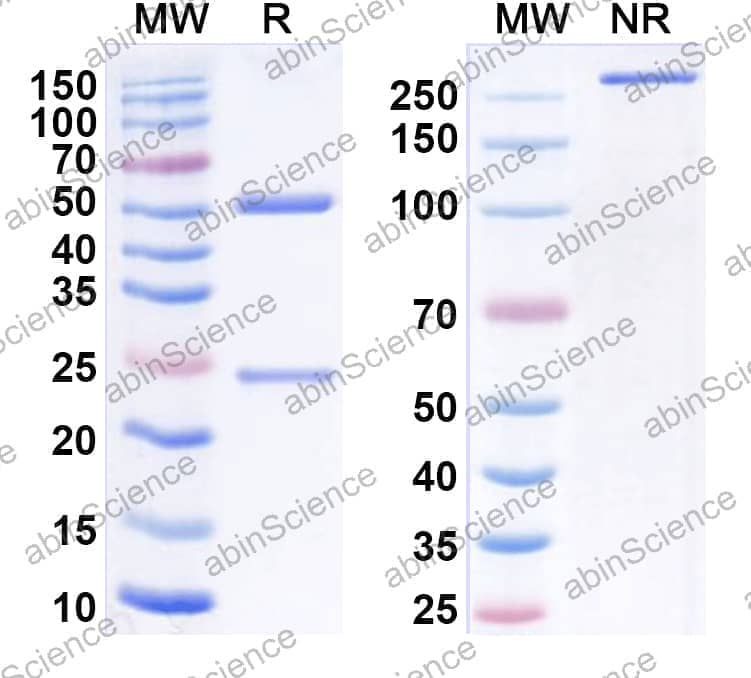
Anti-Mouse TIMD4/TIM-4 Recombinant Antibody (RMT4-53), FITC (MP042117)

Price(USD): $
Spec:
  • 50T
  • 100T
Number:
Contact us
  • Overview

  • Images

  • References

  • Datasheet

  • SDS

Overview
Catalog No.MP042117
Description
Anti-Mouse TIMD4/TIM-4 Antibody (RMT4-53), FITC [RMT4-53] (MP042117) is a rat monoclonal antibody detecting TIMD4 in FCM. Suitable for Mouse.
Highlights
  • Flow Cytometry — Validated for flow cytometry applications.
  • Fluorescent Label — Direct conjugate for streamlined workflows.
Species reactivityMouse
ApplicationsFCM
Host speciesRat
IsotypeIgG2a, kappa
Clone IDRMT4-53
ConjugationFITC
Clonality Monoclonal
Target TIMD4, T-cell immunoglobulin mucin receptor 4, TIM-4, TIMD-4, T-cell membrane protein 4, TIM4, T-cell immunoglobulin and mucin domain-containing protein 4
Endotoxin level Please contact with the lab for this information.
Accession Q6U7R4
Form Liquid
Storage buffer 0.01M PBS, pH 7.4, 0.2% BSA, 0.05% Proclin 300.

Please refer to the specific buffer information in the hardcopy of datasheet or the lot-specific COA.

Stability and Storage Store at 4°C for 12 months. Protect from light. Do not freeze.
Background

T-cell immunoglobulin and mucin domain-containing protein 4 (TIMD4/TIM-4) is a ~37 kDa protein. Phosphatidylserine receptor that plays different role in immune response including phagocytosis of apoptotic cells and T-cell regulation. Controls T-cell activation in a bimodal fashion, decreasing the activation of naive T-cells by inducing cell cycle arrest, while increasing proliferation of activated T-cells by activating AKT1 and ERK1/2 phosphorylations and subsequent signaling pathways. Also plays a role in efferocytosis which is the process by which apoptotic cells are removed by phagocytic cells. Mechanistically, promotes the engulfment of apoptotic cells or exogenous particles by securing them to phagocytes through direct binding to phosphatidylserine present on apoptotic cells, while other engulfment receptors such as MERTK efficiently recognize apoptotic cells and mediate their ingestion. Additionally, promotes autophagy process by suppressing NLRP3 inflammasome activity via activation of STK11/PRKAA1 pathway in a phosphatidylserine-dependent mechanism.

1. Miyanishi, M. et al. (2007) Nature 450, 435-9. PMID: 17960135
2. Rodriguez-Manzanet, R. et al. (2008) Journal of immunology (Baltimore, Md. : 1950) 180, 4706-13. PMID: 18354194
3. Mizui, M. et al. (2008) International immunology 20, 695-708. PMID: 18367551
4. Liu, W. et al. (2019) Journal of immunology (Baltimore, Md. : 1950) 203, 990-1000. PMID: 31263038
Note For flow cytometric staining, the suggested use of this reagent is 0.5 µg per million cells in 100 µL volume. It is recommended that the reagent be titrated for optimal performance for each application. For research use only.
Images
References
Formula
Mass (g) = Concentration (mol/L) × Volume (L) × MW (g/mol)
Enter any 2 of Mass, Concentration, Volume + Molecular Weight to solve for the unknown.
Mass
=
Concentration
×
Volume
Molecular Weight *
g/mol
Formula
C₁ × V₁ = C₂ × V₂
Enter any 3 of the 4 values to solve for the unknown.
Stock Solution
C₁ (Stock Conc.)
×
V₁ (Stock Vol.)
=
Working Solution
C₂ (Working Conc.)
×
V₂ (Working Vol.)
Recommendation

Contact us for custom quotes, bulk requests and any other issues.

Mail: support@abinScience.com

Distributor list