
 中文
中文 English
 한국어
한국어 日本語
日本語 Español
 Français
 Русский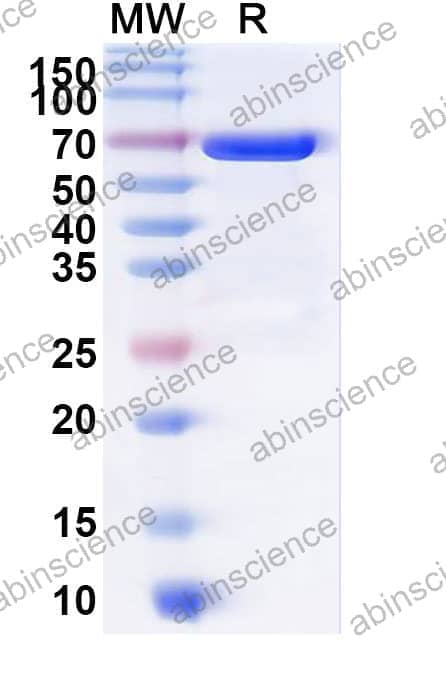
| Catalog No. | JN091014 | ||||||||
|---|---|---|---|---|---|---|---|---|---|
| Description |
Anti-Mycoplasma pneumoniae CARDS Polyclonal Antibody (JN091014) is a rabbit polyclonal antibody detecting cards in ELISA, IHC, WB.
Highlights
|
||||||||
| Species reactivity | Mycoplasma pneumoniae (strain ATCC 29342 / M129 / Subtype 1) (Mycoplasmoides pneumoniae) | ||||||||
| Applications | ELISA, IHC, WB | ||||||||
| Host species | Rabbit | ||||||||
| Isotype | IgG | ||||||||
| Clonality | Polyclonal | ||||||||
| Immunogen | E. coli - derived recombinant Mycoplasma pneumoniae CARDS (Met1-Phe591). | ||||||||
| Target | ADP-ribosylating toxin CARDS, 2.4.2.-, ADP-ribosyltransferase CARDS, Community-Acquired Respiratory Distress Syndrome Toxin, CARDX TX, cards, MPN_372, MP464, Mycoplasma pneumoniae (strain ATCC 29342 / M129 / Subtype 1) (Mycoplasmoides pneumoniae) | ||||||||
| Purification | Purified by antigen affinity column. | ||||||||
| Accession | P75409 | ||||||||
| Form | Liquid | ||||||||
| Storage buffer | 0.01M PBS, pH 7.4, 50% Glycerol, 0.05% Proclin 300. Please refer to the specific buffer information in the hardcopy of datasheet or the lot-specific COA. |
||||||||
| Product Usage Information |
| ||||||||
| Stability and Storage | Use a manual defrost freezer and avoid repeated freeze thaw cycles. Store at 2 to 8°C for frequent use. Store at -20 to -80°C for twelve months from the date of receipt. | ||||||||
| Background | ADP-ribosylating toxin CARDS is a ~68 kDa protein. The main virulence factor for this bacteria, a mono-ADP-ribosylating toxin (mART), that transfers the ADP-ribosyl group from NAD(+) to multiple target proteins in vitro. Also elicits cytopathic effects in mammalian cells, such as disorganization and disruption of respiratory epithelial integrity in tracheal epithelium and vacuolization in the cytoplasm of CHO and HeLa cells as well as in mice and baboons. Treatment of mice or baboons with CARDS elicits a response that is consistent with human M.pneumoniae infections and mouse models of both infection and intoxication, suggesting that CARDS toxin is sufficient to cause prolonged inflammatory responses and airway dysfunction. Treatment of baboons with CARDS induces a number of cytokines; G-CSF (40 fold), IL-1Ra (10 fold), IL-6 and IL-8 (333 and 100 fold, respectively), MIP-1a (5 fold), and RANTES (9 fold). Treatment of mice gives a similar response. 1. Kannan, TR. et al. (2006) Proceedings of the National Academy of Sciences of the United States of America 103, 6724-9. PMID: 16617115 2. Kannan, TR. et al. (2014) Molecular microbiology 93, 568-81. PMID: 24948331 3. Bose, S. et al. (2014) mBio 5. PMID: 25538194 4. Ramasamy, K. et al. (2018) mBio 9. PMID: 29362229 5. Balasubramanian, S. et al. (2019) Cellular microbiology 21, e13032. PMID: 30977272 6. Ramasamy, K. et al. (2021) Scientific reports 11, 11571. PMID: 34078958 7. Hardy, RD. et al. (2009) PloS one 4, e7562. PMID: 19859545 | ||||||||
| Note | For research use only. |
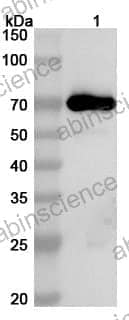
Western blot analysis was performed using anti-0108 polyclonal antibody at 1ug/mL on various samples.
Lane 1: recombinant Mycoplasma pneumoniae CARDS (Catalog No: JN091012)
Contact us for custom quotes, bulk requests and any other issues.
Mail: support@abinScience.com
+86-27-65523339
Building C, No. 666, Shen Dun Si Lu, Wuhan, 430206, China


